
 ” width=”333″ height=”316″>
Luckiest Regions for El Gordo: Data Insights and Superstitions Behind Spain’s Biggest Lottery
- Ian Harper
- 22 Nov 2024
The Spanish Christmas lottery, known as “El Gordo” (The Fat One), is a beloved holiday tradition that captivates millions each year. With its massive prizes and cultural importance, it’s no wonder certain regions have gained a reputation for being “luckier” than others. Let’s take a closer look at the regions where winning tickets have been sold most often, along with some unique customs that make this lottery season so special.
Top 5 Luckiest Regions for El Gordo Wins
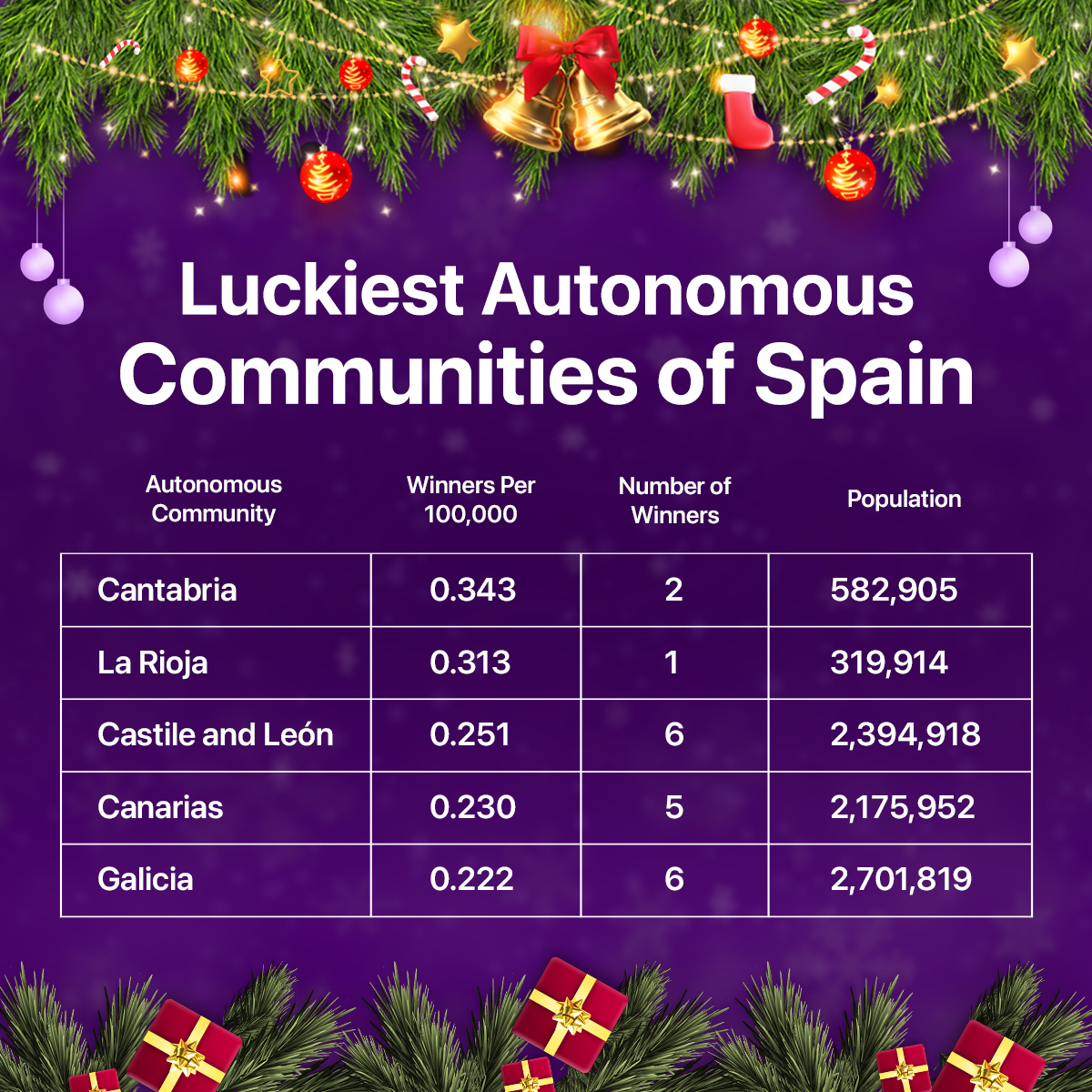
Luckiest Autonomous Communities of Spain
Over the years, some parts of Spain have seen more winning tickets than others. Andalucia has the highest number of reported wins of any of the regions of Spain, with 10, meaning that there have been reported wins here nearly every year, besides 2, since 2012.
Here’s a look at the regions that stand out:
- Cantabria: This region leads with a win rate of 0.343 per 100,000 residents. For one of the smallest by population in mainland Spain, it’s a strong showing.
- La Rioja: The smallest of mainland Spain’s regions with a win rate of 0.313 per 100,000 residents. With just 1 reported win it shows that just one can have a big impact
- Castile and León: With 6 winning tickets. Castile and León’s win rate is especially notable at 0.251 per 100,000 residents. It is the top region with over 2 million inhabitants.
- Canarias: The islands have a win rate of 0.230. Making it the fourth most of any of the Spanish Regions.
- Galicia: Rounds off the top 5 with a win rate of 0.222 per 100,000 inhabitants
Cultural Rituals for Good Luck
While the numbers tell one story, excitement around "El Gordo" extends beyond buying a ticket. Across the country, unique rituals add a magical touch to the anticipation. Does your region rank low? Try adopting one of these famous lottery rituals for a bit of extra luck this year.
Here are some of the most popular:
- Pregnancy and Mushrooms: Pregnant women are considered symbols of good luck. One quirky tradition involves gently rubbing boletus mushrooms on a pregnant woman's belly to transfer luck.
- Sharing Tickets: Buying and sharing tickets with friends and family is a cherished practice. It embodies the idea that if luck strikes, everyone shares the joy.
- Eating 12 Grapes: A New Year’s tradition for good fortune, some people extend this custom to the Christmas lottery, eating 12 grapes for 12 blessings before the draw.
- Don’t Put Your Bag on the Floor: This common superstition warns that placing a bag on the floor invites financial misfortune. Keeping bags elevated is believed to safeguard wealth and, by extension, luck.
- Sticking to a Favorite Number: Many Spaniards swear by the same number year after year, believing persistence might eventually pay off.
- Symbolic Items: Carrying a gold coin, pinning a charm to clothing, or keeping an iron key in a bag are subtle ways people try to draw luck. Psychics also recommend having parsley branches, yellow candles, or a blue ribbon nearby.
- Burning Old Tickets: In a unique ritual, people burn old lottery tickets with an orange candle while repeating, “may your ashes return to me as a prize,” three times. This is said to attract good luck for the next draw.
- Visiting Popular Lottery Vendors: Some shops, like Doña Manolita in Madrid, have a reputation for selling winning tickets. The faithful believe visiting these locations boosts their chances.
- Galician Traditions: Galicia, steeped in folklore, has rituals like hanging a ticket from a horseshoe. The region’s mystical roots, including the influence of witches (Meigas), add a special touch to these practices.
Whether you rely on statistics, superstition, or a bit of both, El Gordo remains a beloved tradition that unites people around the country in hope and excitement each year.
Sources
The data in this article has been meticulously compiled from multiple reputable sources, including detailed reports on El Gordo winners and historical analyses from El País. Further context and cultural perspectives were provided by Murcia Today and Euro Weekly News, which delve into Spain’s unique lottery traditions and superstitions. These combined insights offer a comprehensive view of the regional patterns and cultural significance surrounding Spain’s iconic Christmas Lottery.
Fair Use
Usage of the information here is allowed once credit is given with a link back to our site.